Get to know the incoming director of the Robertson School
April 1, 2026
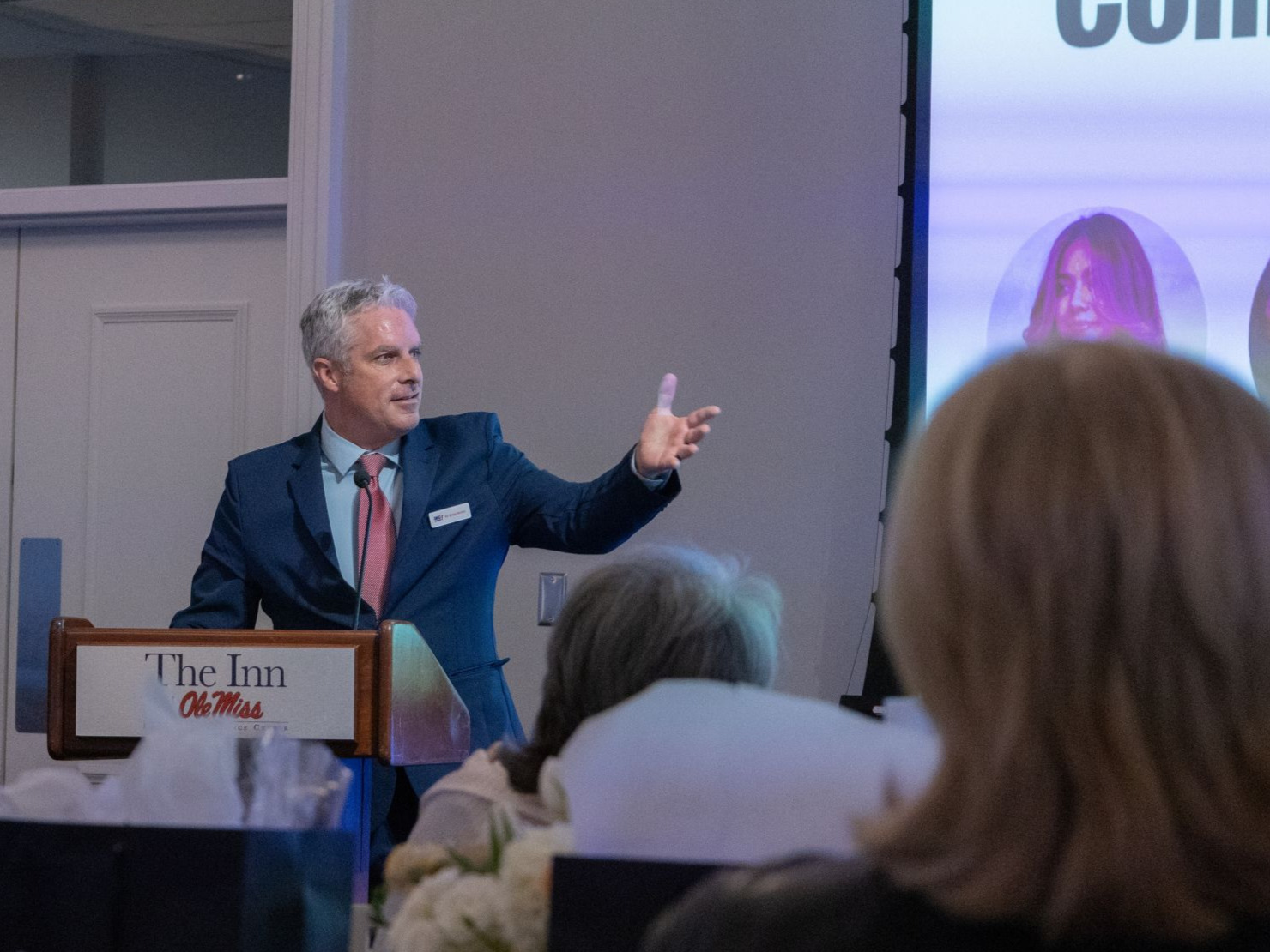
RICHMOND, Va. — Dr. Brian G. Smith will become the next director of the VCU Robertson School of Communication. The College of Humanities and Sciences made the announcement, noting that he will begin working at VCU this summer.
Smith currently serves as the first department chair of integrated marketing communications at the University of Mississippi. He joins the Robertson School with a vision centered on innovation and "communication as action."
A self-described "builder" and “connector” who managed one of the largest IMC programs in the country, Smith said he was drawn to Virginia Commonwealth University by its forward-thinking "what’s next" mentality and its recent transition to the School of Communication.
By prioritizing servant leadership and the unique nature of the Richmond media market, Smith plans to position the school as a hub for both technical mastery and ethical decision-making, emphasizing that while AI may change the industry, human engagement remains the essential driver of effective communication.
We recently sat down with Smith to get a sense of where he sees the future of communication going and the role he wants to see the Robertson School play moving forward.
Five Questions for the New Director
From Oxford to RVA
QUESTION: At Ole Miss, you served as the first Department Chair of Integrated Marketing Communications. How does that experience leading a massive, modern IMC program inform your vision for the Robertson School as we lean into our own new identity?
ANSWER: "I inherited one of the largest Majors on campus with 1600 students. ... The first thing that I realized when I got here was you have to hit the ground running, so that’s what I’ve been doing with VCU - meeting with the current leadership team to be ready for when I start this Summer. ... When I came to VCU to interview, I was really impressed with what I saw as a 'what’s next?' mentality–the Media + AI Initiative, the new concentration…the focus is on thinking ahead to what’s possible. ... I see myself as a builder, and the “what’s next” mentality here, the “unlike any other” focus of VCU excites me for what we can build together."
On the Future of 'Empowered Engagement'
QUESTION: A significant part of your research focuses on 'empowering engagement' and the influence of social media users. As AI and algorithmic curation become central to how we communicate, how will you lead the school in teaching students to maintain authentic human engagement and ethical influence?
ANSWER: "AI won’t take your job. It’s people who know how to use AI effectively who are going to take your job. ... Part of that learning how to use AI is ... developing the proper imperatives around human engagement. ... Most people see AI as a short cut, but there really is no short cut to effective communication. It takes work, and that’s the ethical and human engagement piece of AI…Those who let AI communicate for them or, worse, think for them are finding that it’s not very effective. ... If we want students to know how to use AI effectively, then we as faculty have to model it…the training and the learning have to start with us."
On the Robertson 'Renaissance'
QUESTION: The school recently transitioned from 'Media and Culture' to the 'School of Communication.' Given your background in the 'Four C’s'—Culture, Context, Connection, and Communication—how do you plan to use this new name as a springboard for our students’ careers?
ANSWER: "For me, communication is action. The transition from media and culture to communication moves the mark from studying what’s around us ... to what we can do about it. ... Our goal is to prepare students to be communicators who can bring about change—innovators, decision makers. ... Switching to communication puts you at the decision-making table. ... Knowing how to engage others, how to communicate effectively, is where the value of communication for our students is found."
On Leadership and Fostering Community
QUESTION: You’ve often shared how your personal values and 'inner work' guide your professional life. How does the idea of 'servant leadership' play into your goals for the Robertson faculty and student body?
ANSWER: "The challenge of being the leader is that you are the brand. You embody the brand, you live the brand, you breathe the brand. ... As a servant leader, I feel like I’m there to embody the brand. ... The way that I lead, the way I serve, and the way I do things represents Robertson, and that’s a responsibility I take seriously…It has to trickle down to the faculty and students because they also represent the brand. ... That builds community. That’s what we want."
On the 'Richmond Connection'
QUESTION: Richmond is a unique media market with a rich history in advertising and journalism. Coming from Oxford, Mississippi, what are you most excited to learn from the local RVA professional community, and how can Robertson better serve as a hub for local industry partners?
ANSWER: "The number one word for me is access. ... Getting in Richmond means having that connection to serve the large RVA professional community. ... We serve the Richmond community through the graduates we produce, the programs we develop, [and] how we’re teaching our students. ... I see myself as a connector, a facilitator…Let’s talk about what we can do together. How can Robertson help you, and how can you help Robertson? …We have a phenomenal advisory board dedicated to keeping Robertson connected to the latest developments in the industry. They’re key to further building this Robertson-industry synergy."
The 'Rapid Fire' Round
QUESTION: Richmond vs. Oxford: You’re trading the 'Velvet Ditch' for the River City. What’s the first Richmond landmark or RVA festival on your 'must-visit' list?
ANSWER: "The Museum of Fine Arts is huge for me. ... I’ve noticed that you’ve got an amazing street art movement going on. ... I’m looking forward to your festivals like Arts in the Park…your food festivals."
QUESTION: The Soundtrack of Strategy: What’s the 'go-to' music or podcast you listen to when you’re doing deep research or gearing up for the day?
ANSWER: "I’m a big indie music guy. ... I love Grizzly Bear, Lord Huron, Band of Horses, Surf Hat, Hippo Campus, My Morning Jacket. ... The more obscure, the better… I’m looking forward to digging into the RVA Indie scene"
QUESTION: The Digital Detox: As an expert in social media engagement, what is your favorite way to 'unplug' and spend quality time with your family?
ANSWER: "I love unwinding at the piano. ... I have four sons who are far better instrumentalists than I am (guitar, strings), and so we’ll just jam. ... Our go-to is usually the Beatles, Lumineers, and for the more intense detox sessions, some Led Zeppelin and Nirvana."
QUESTION: The First Impression: If you had to describe the 'vibe' of the Robertson School in just three words after your first visit, what would they be?
ANSWER: "Hip. You’ve got some creative vibes going on there. Diverse. Walking around campus, that mix of backgrounds, cultures, interests — it just speaks to me. I love it. Resurgent. It feels like you’ve got a good mix of the traditional, the historical, with new buildings and new stuff happening.It feels like Robertson is on the brink of something big."
QUESTION: The Breakfast Club: What’s your favorite way to fuel up for a long day of meetings? ANSWER: "Nothing beats a good breakfast burrito ... full of eggs, chorizo, potatoes, cilantro, salsa. ... But I’ll admit that I’m still a really big breakfast cereal guy. ... Lucky Charms, Cinnamon Toast Crunch. ... The more sugary the better."
While Smith’s most recent stop was the "Velvet Ditch" of Oxford, Mississippi, his journey to Richmond is a return to a region he has long admired.
Originally a "California beach boy" from Orange County, Smith said he became an "East Coast convert" while earning his Ph.D. at the University of Maryland. During those years, he spent significant time exploring Virginia.
"I fell in love with this part of the country ... the history, the fall colors, everything, the row homes," Smith said.
Now, as he transitions from a small college town back to a major urban hub, he said the move to VCU feels like a natural homecoming: "In every way I’ve dug deeper into this school and this university, I feel like, 'This is where I’m meant to be.'"